Stop trying to write your whole story at once. Story isn’t something you tell from beginning to end — it’s built one scene at a time. In this episode, we’ll explore why learning to write one strong scene is the key to everything that follows.
Why Scene Matters More Than Story
1 thought on “Why Scene Matters More Than Story”
Comments are closed.
Related Post
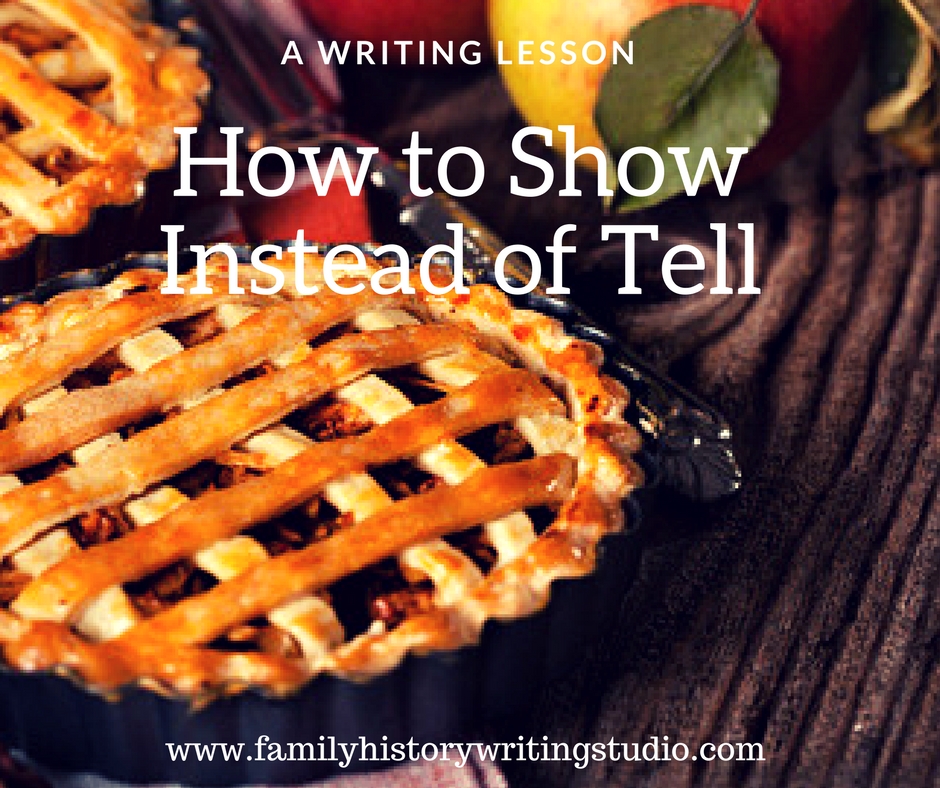
How to Show Instead of Tell: A Writing LessonHow to Show Instead of Tell: A Writing Lesson
“Writing in scenes represents the difference between showing and telling. The lazy, uninspired writer will tell the reader about a subject, place or personality, but the creative non-fiction writer will show that subject, place or personality, vividly, memorably-and in action, in scenes.
Lee Gutkind, You Can’t Make Stuff Up
Writers are told all the time to show not tell. What does that exactly mean? How does that apply to narrative nonfiction and specifically family history stories?
Narrative nonfiction is comprised of summary and scenes. Simply put, summary is telling, and scenes are showing. To show in nonfiction, we must include scenes and not just summary. Your family history stories are likely boring because you are only using summary, you are only telling. To make your stories entertaining and compelling, so that they read like a good book you must embrace scenes. Scenes are the half of the nonfiction equation that brings a family history story to life.
What is a family history scene?
In the case of family history, a scene recreates an event or an experience for the reader from your ancestor’s life. For example, getting on a ship to America, voting for the first time, giving birth, getting married, proposing to a future spouse or signing documents to own their first land.
These scenes are recreated from details pulled from a document, a picture, a diary, a letter. Maybe details are derived from a newspaper article, or an interview or a recalled conversation. These scenes might rely on social, local, regional or world history to help recreate them on the page. You’ll likely require a combination of these sources to bring a scene to the page.
A scene shows the action in real time. The reader is placed immediately in the event as if it is playing out before our eyes. A scene is filled with description, detail and dialogue, necessary to bring the scene to life. The more specific you can be the more real it becomes for the reader.
Jumping into writing scenes can be overwhelming for new writers. The best place to start is by learning to show, one sentence at a time.
Examples
Telling
Tom walked every Sunday to church.
Showing
Tom strolled along the dusty road to church, adorned in his freshly pressed Sunday shirt, the starch collar scratching at his neck.
Telling
Grandma baked a pie.
Showing
The cinnamon apple pie cooled on the kitchen window sill, the golden crust glistened, and the sweet smell surrounded Grandma’s house as we ran through the front door.
See the difference. In the showing examples, above we get a vivid picture that we can imagine in our mind’s eye the setting and action. It gives us the feeling of being there and experiencing it for ourselves.
3 Steps to Start Showing in Your Ancestor’s Stories
- Use strong active verbs. I could have used “Tom walked” but the verb ‘stroll’ conjures up a more specific image. I could have used hustled, or ambled or skipped, all would have provided a clear picture of Tom and his actions.
- Use specific nouns and precise adjectives in descriptions that paint a picture for the reader. For example, Grandma’s pie on the windowsill paints a very clear picture. It’s not just a pie but a cinnamon apple pie. Be specific in your details and descriptions.
- Use Sensory Details. – Don’t just tell us how something looked, show us how it looked, smelled, sounded, tasted and felt. Use all your senses, of course not all in the same sentence. We not only see Tom in his freshly pressed shirt, but we feel it scratching. And of course, we smell Grandma’s pie as we approached the house.
Start practising showing in your family history stories by using these three steps to start transforming your sentences into showing sentence instead of telling sentences.
Want to learn how to build a scene and connect them into a story, consider workbook #4 in the Write Your Family History series. Crafting a Scene, Showing Your Ancestors in Action walks you through building scenes and connecting those scenes into a complete story. Or consider our upcoming course Writing a Family History Scene and get hands on practise building and writing scenes. This course will transform your writing.

Make Your Scenes Pop!Make Your Scenes Pop!
Do your stories pop?
Do they engage your reader and give them a vision in their mind through the words you’ve strung together on the page. As writers, our goal is to create clear and detailed images through the use of descriptive language. If you’re not using descriptive writing in your family history stories then you are missing an opportunity to show rather than tell. Descriptive writing adds texture, colour and dimension to our stories. It is how we make reading a sensory experience for our readers.
My favourite quote that helps to illustrate showing in scenes remains:
“DON’T TELL ME THE MOON IS SHINING; SHOW ME THE GLINT OF LIGHT ON BROKEN GLASS.”
ANTON CHEKHOV
As we discussed in How to Write a Scene, detailed description, imagery and figurative language are components of a scene that we heavily rely on to make a scene vivid and in full colour for the reader. Today’s post pulls together a few tips to help you improve your use of description in writing your scenes.
Use all of your senses.
As we mentioned in How to Write a Scene using your senses is an essential ingredient of descriptive writing. Using the senses of touch, taste, hearing, seeing and smelling are all equally important in bringing your ancestor’s experience to life on the page. We often tend only to use sight, but employing a combination of senses gives your reader a much deeper experience.
Avoid Clichés
Clichés are words or expressions that have been overused. They may have been original at one time but through overuse they have become clichés. Be aware of them and find fresh and original ways to describe your story. Some examples of clichés include dead as a doornail, smart as a whip, sweet as sugar. You get the idea.
Use a Thesaurus
Try to avoid using the same words in a sentence, paragraph or, if it is an uncommon word, in the story, unless the word is used for effect. This applies to standard words and less common words. Use a thesaurus to find alternative words that convey the same meaning. (I used the word “word” eight times – did you notice?)
Use Personification, Similes, and Metaphors
Personifications, similes, and metaphors can add sensuous references vividly, explain things, express emotion and entertain your reader. They add richness to your writing and show an image in a vibrant way through example rather than tell directly. They should replace, enhance or define adjectives like, beautiful, sweet, picturesque and others. We’ve all learned about similes and metaphors in school. Perhaps, it’s time for a refresher course, and a little practice to help you see just how important it can be in writing your family history stories.
Let’s take a look at each with examples from the memoir Glass Castle by Jeannette Walls.
Personification
Personification adds human personality traits to inanimate objects.
“Finally, we entered hill country, climbing higher and deeper into the Appalachian Mountains, stopping from time to time to let the Oldsmobile catch its breath.”
Simile
A simile ties two things together using the words ‘as’ or ‘like.’
“ It was like sewing meat. It was sewing meat.” Mr. Walls gets beat up and asks for Jeannette to sew up a gash on his arm.
Metaphor
Metaphors are figurative comparisons that describe one thing by directly assigning it the traits of another, so one idea is understood in terms of the other.
Rex says Maureen “is a sick puppy, the runt of the litter, who should have been drowned at birth”
This statement expresses how Rex feels Maureen is weak and dependent, and the rest of the family has to provide for her.
Don’t Over Do it!
Beginning writers tend to lack confidence in writing description in those early days, but once they gain an understanding of description, they can then go too far and overdo it. As I mentioned in writing a scene, too much detail can completely overtake a story and it bears repeating again. Once we get the handle on description and detail we tend to find a reason to think more is better. It is not. As the artist of this work you must make decisions about which descriptions and details serve the story best, the feeling you want to portray on the page. Description should enhance your characters and their world, not overwhelm it.
Thank you for another great storyline!